Orbital - Asteroid hyalosis (an ultrasonographic mimic of vitreous hemorrhage)
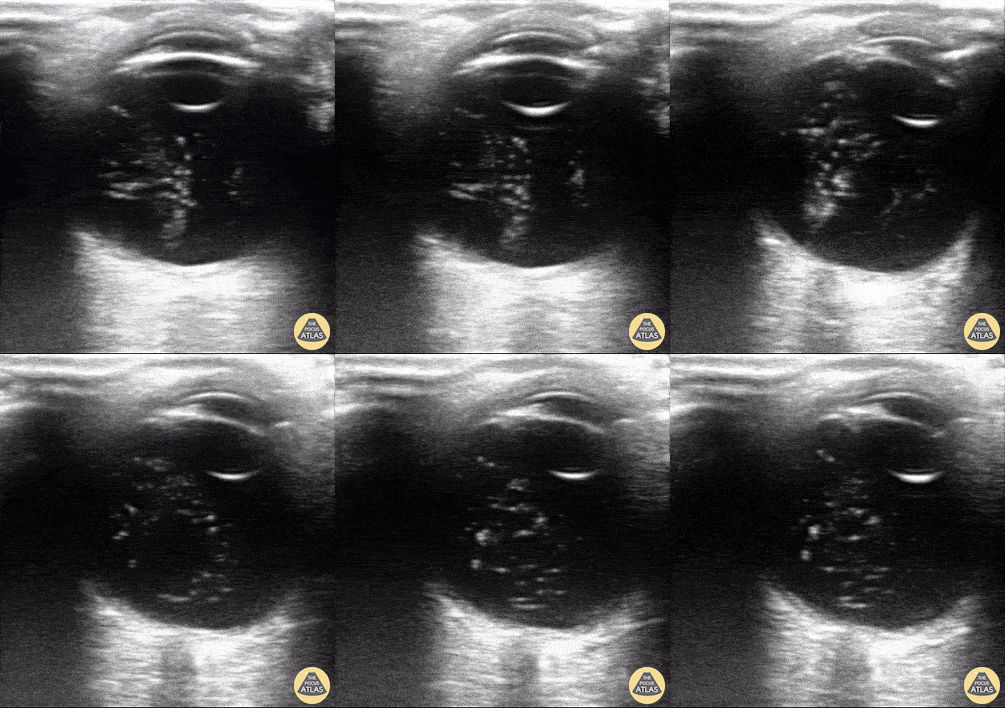
Caption
An 59-year-old male with PMH of ESRD presented with 10-day hx floaters in his right eye. Sonographic findings are shown, notable for multiple, mobile, hyperechoic densities that swirled rapidly with eye movement. The appearance is similar to that of vitreous hemorrhage. The patient was subsequently evaluated by ophthalmology who confirmed a diagnosis of asteroid hyalosis; a rare, benign condition of calcium phospholipid deposition within the vitreous fluid. The sonographic findings are so similar to vitreous hemorrhage that the two are commonly mistaken for each other. The clinical differentiation is that asteroid hyalosis is most often asymptomatic, and almost always without visual deficits (possibly benign floaters). These patients also rarely require vitrectomy. In addition to clinical presentation, asteroid hyalosis can be differentiated from vitreous hemorrhage by subtle sonographic features. In asteroid hyalosis, the hyperechoic calcium phospholipid particles have a sparkling, "starry sky" appearance compared to the typically duller heterogenous blood seen in vitreous hemorrhage. Vicky Lam, MD, MS; Christianna Sim, MD; Olusola Sanusi, MD Kings County Hospital, SUNY Downstate Emergency Medicine