Nerve Block Gallery - Infraclavicular Brachial Plexus Nerve Block
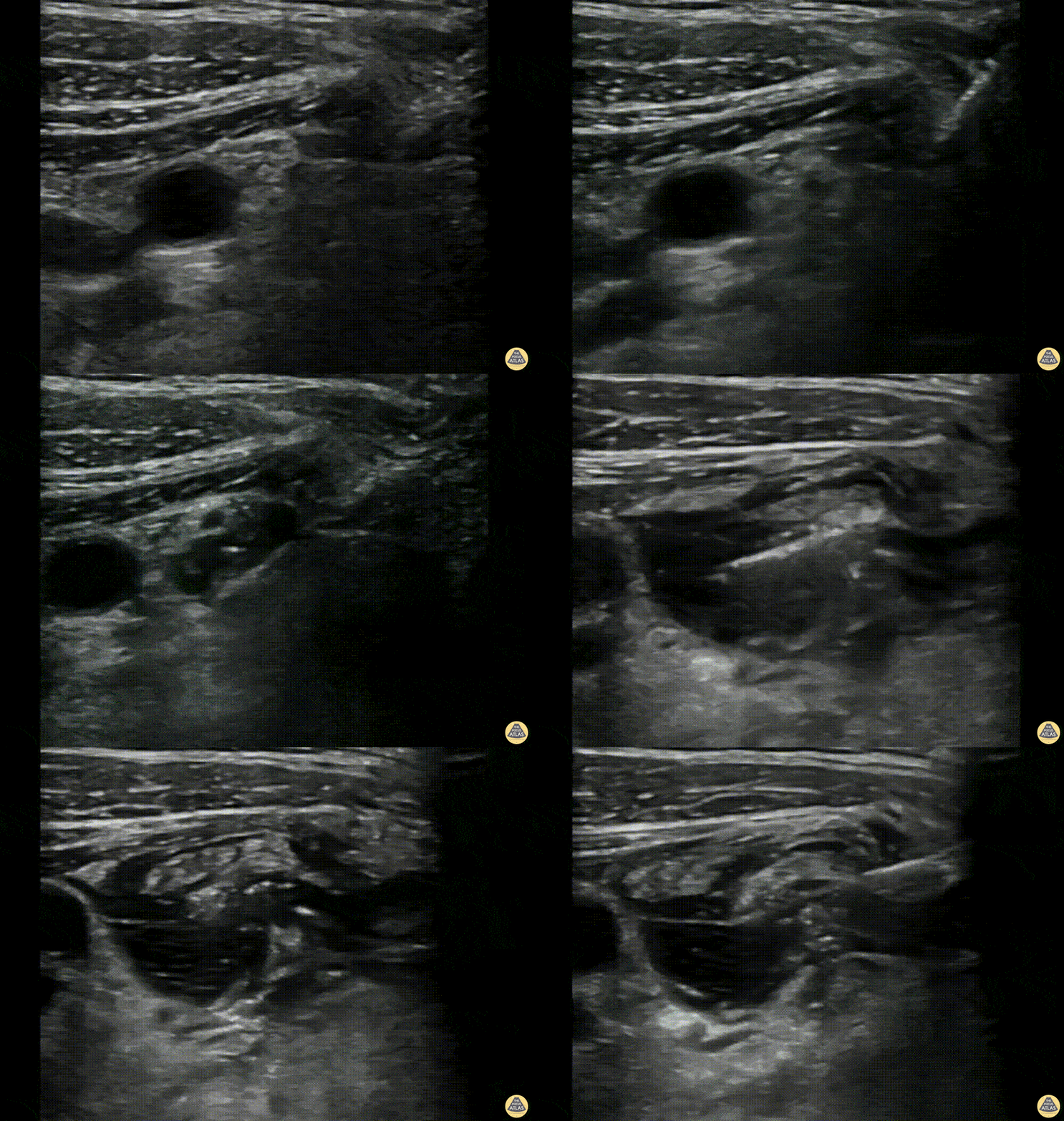
Caption
A 71-year-old male presented to the ED one day after a ground level mechanical fall during which he sustained a L shoulder injury. Given his age and initial borderline blood pressures, he received CT images of his chest, abdomen and pelvis which initially revealed a minimally displaced humeral head fracture extending into the greater tuberosity. His workup was ultimately otherwise unremarkable. He was consented for an infraclavicular block for pain control prior to being placed in a cuff and collar sling. The needle can be seen approaching the axillary artery, around which the lateral, posterior and medial cords of the brachial plexus lie anatomically. The needle approach is from cephalad to caudal, with the ultrasound probe placed in the deltopectoral groove. The goal of this block is to deposit anesthetic at the 6 o’clock position relative to the axillary artery. Anesthetic can be seen depositing just superior to the axillary artery, around the 7 o’clock position (screen right). A total of 20 cc of 0.25% bupivicaine with 4 mg of dexamethasone was used. Prior to the block, the patient’s pain score was an 8 out of 10, with significant pain with passive or active range of motion. Shortly after the block, his pain decreased to a 2 and he started ranging his shoulder with minimal discomfort. He was placed in a sling and ultimately stayed in the observation unit for frequent falls and PT/OT evaluation. Dr. Spencer Seballos, PGY-2, Denver Health Emergency Medicine Residency Dr. Fred Milgrim, Ultrasound Fellow, Denver Health Emergency Medicine